Introduction
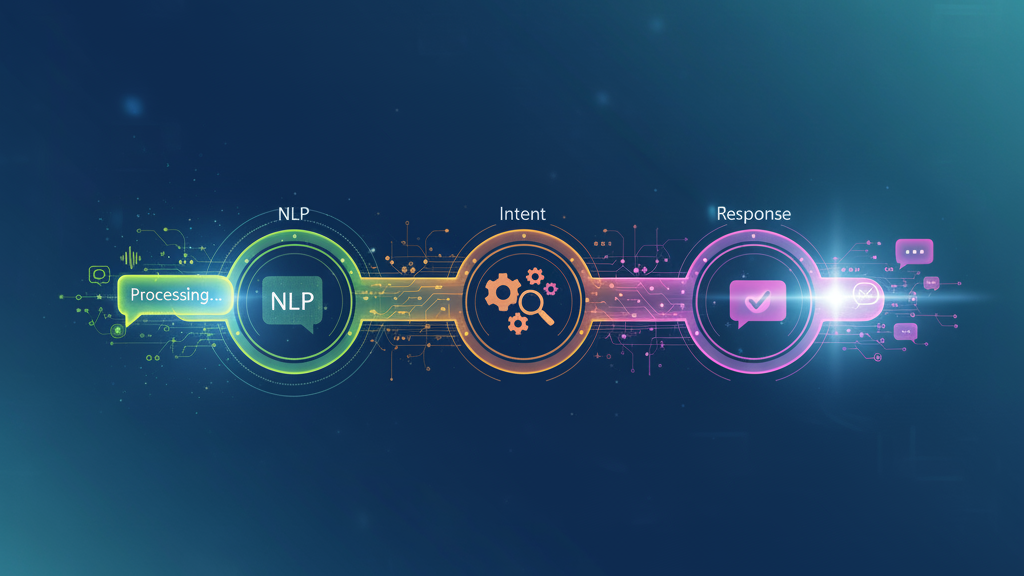
Every time a customer types a message into a chatbot, a series of smart processes happen behind the scenes in milliseconds. It’s not magic — it’s a combination of Natural Language Processing (NLP), Intent Matching, and Machine Learning (ML). In this article, we’ll break down how these components work together to make conversations feel natural and intelligent.
1. Understanding Natural Language Processing (NLP)
NLP is the foundation of every AI chatbot. It allows computers to understand, interpret, and respond to human language. NLP works by breaking sentences into parts — identifying entities, verbs, emotions, and context — so the chatbot knows what the user really means.
Example:
When a user types, “I’d like to apply for a loan,” the chatbot doesn’t just see random words. NLP helps it recognize that the user’s intent is to start a loan application process.
Key NLP tasks in chatbots:
- Tokenization: Breaking text into words or phrases.
- Entity Recognition: Identifying keywords like “loan,” “account,” or “invoice.”
- Sentiment Detection: Understanding tone or urgency (e.g., frustration vs curiosity).
- Context Tracking: Remembering what was said earlier to keep the conversation coherent.
2. The Science of Intent Matching
Intent Matching is how a chatbot figures out what the user wants to do. It compares the incoming message against a set of known intents — patterns or examples the bot has learned from.
Example:
If the chatbot is trained with examples like “Check my balance,” “How much money do I have?” and “Show account total,” it learns these all map to one intent: balance inquiry.
How it works:
1. The NLP layer cleans and analyzes the message.
2. The chatbot’s intent engine compares it to stored patterns.
3. A confidence score determines the best response or next step.
If the score is too low, the chatbot can ask clarifying questions — or escalate to a human.
3. The Role of Machine Learning (ML)
Machine Learning lets chatbots improve over time. Instead of relying only on static rules, ML models learn from user interactions — what worked, what didn’t, and which replies got positive results.
Example:
If users often rephrase a question after the chatbot’s reply, ML detects that mismatch and helps refine the intent recognition model. Over time, accuracy improves.
What ML brings to chatbots:
- Smarter understanding of variations in phrasing.
- Better personalization based on user behavior.
- Continuous learning from real conversations.
4. Bringing It All Together
When you type a message, this is what happens: 1. NLP breaks down and interprets the message.
2. Intent Matching determines what you want.
3. Machine Learning uses past data to refine predictions and choose the most helpful response.
Together, these systems make modern chatbots built by CuChat feel responsive, context-aware, and genuinely helpful.
Conclusion
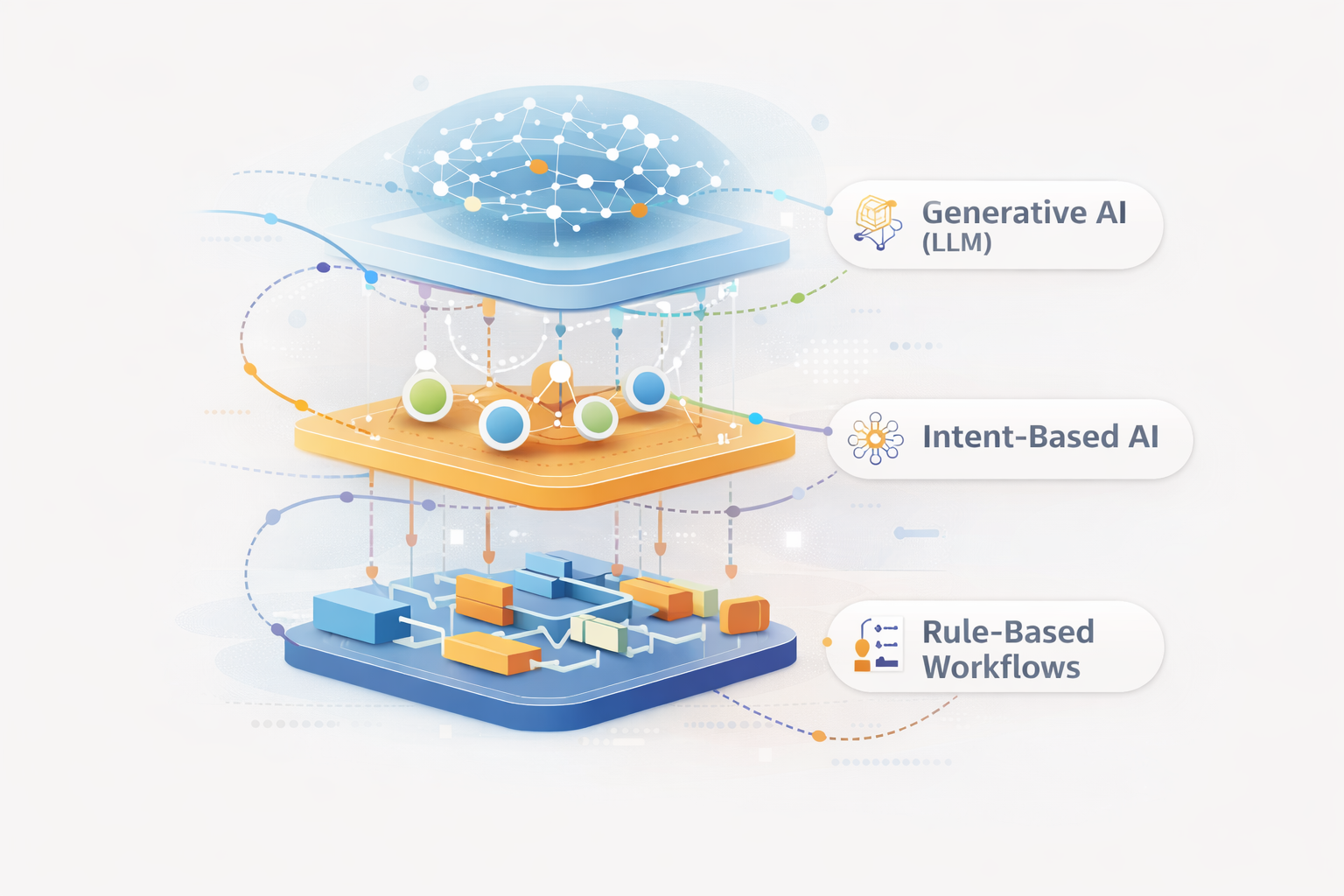
Behind every smart chatbot conversation is a layered system of NLP, intent recognition, and machine learning. For SMEs, understanding these concepts isn’t just technical curiosity — it’s how you evaluate which chatbot platform truly “gets” your customers. CuChat combines these technologies to deliver more than answers — it delivers understanding.