Introduction
Chatbots have evolved far beyond simple question-answer scripts. What began as rule-based automation has expanded into intelligent assistants capable of understanding intent and even generating natural conversations. But as AI becomes more embedded in every tool, the differences between chatbot types are no longer clear-cut.
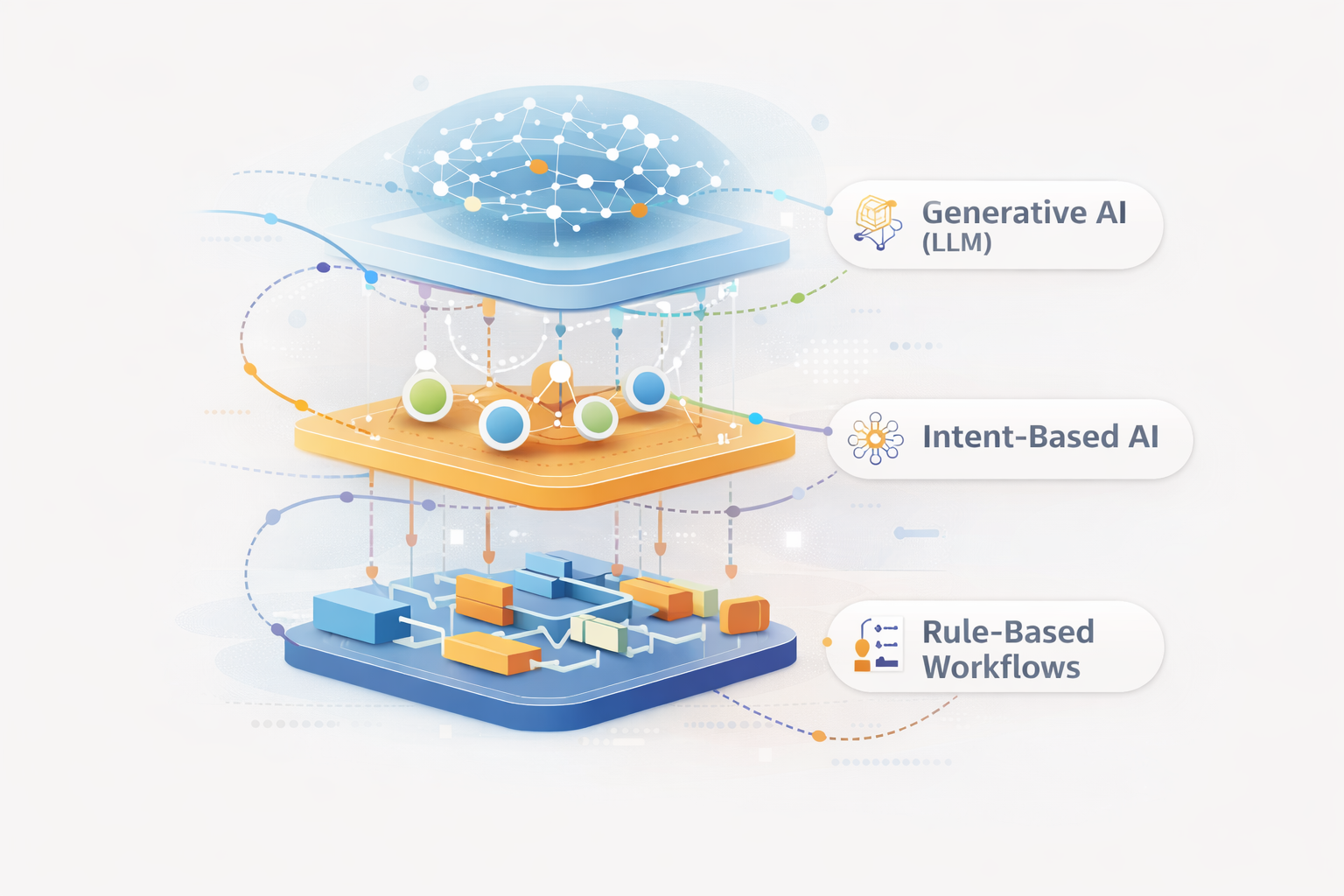
In reality, many modern platforms now blend these types. A workflow bot may use generative AI to write smoother replies, and intent bots can rely on LLMs for fallback reasoning. This blending makes the boundaries between chatbot types less distinct than before.
Here’s a breakdown of the three main categories — and how modern platforms blend them.
1. Rule-Based or Workflow Chatbots
These are the simplest form of chatbots. They follow pre-defined rules, decision trees, or keyword triggers. You decide how the conversation flows — like a choose-your-own-adventure map.
How they work:
A rule-based chatbot looks for specific words or buttons and responds according to the rules you set. For example, if a customer types “pricing,” it sends a predefined reply or opens the pricing menu.
Strengths:
· Easy to set up, no AI required.
· Predictable and reliable responses.
· Ideal for FAQs, form-style data collection, and lead capture.
Limitations:
· Struggles with unexpected phrasing or complex questions.
· Feels robotic if the conversation goes off-script.
2. Intent-Based (AI-Powered) Chatbots
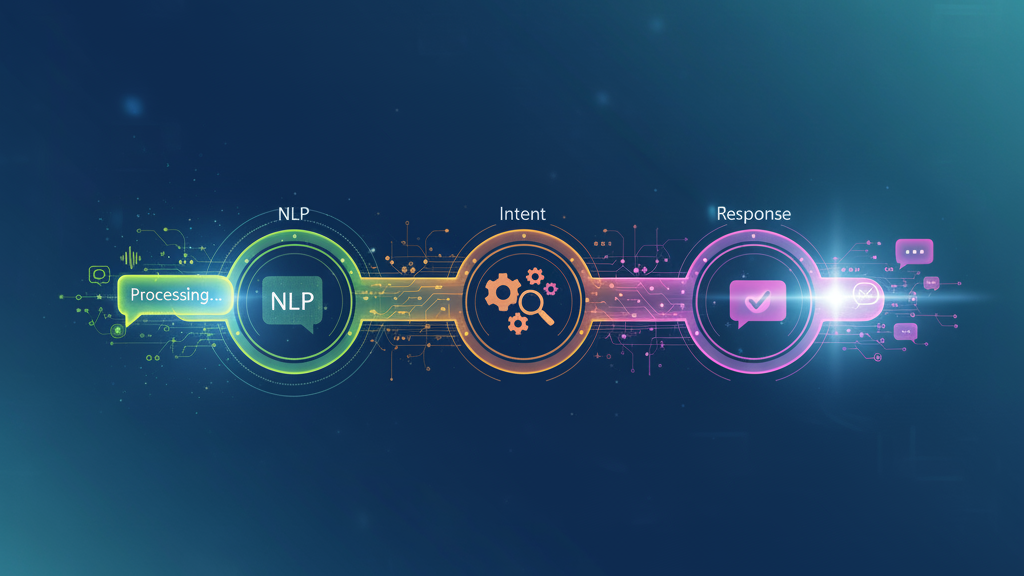
These use Natural Language Processing (NLP) to understand what users mean rather than what they type. Instead of rules, they rely on intents — patterns representing different user goals.
How they work:
You train the bot by giving examples: “open account,” “start a new account,” or “create account” all map to the same intent. The chatbot uses NLP to detect which intent matches the user’s message.
Strengths:
· Understands varied phrasing.
· Can manage broader use cases like booking, support, or tracking.
· Smarter than rule-based bots, but still structured.
Limitations:
· Needs constant retraining to stay accurate.
· Can misclassify if intents overlap.
· Limited to what it’s been taught — no true reasoning.
3. Generative AI Chatbots
The latest generation of chatbots, powered by Large Language Models (LLMs) like GPT-4 or Claude, generate answers in real-time rather than retrieving pre-written responses. They understand context, tone, and nuance, enabling human-like conversation.
How they work:
Instead of training on intent samples, you define behavior through instructions, context, and reference files. The model then crafts its own reply based on that input.
Strengths:
· Handles open-ended queries gracefully.
· Adapts tone and phrasing dynamically.
· Capable of reasoning, summarizing, and handling nuance.
Limitations:
· Harder to control for accuracy or consistency.
· May require safeguards to prevent off-topic or hallucinated replies.
Examples: ChatGPT, Claude, Gemini, CuChat.
Why the Lines Are Blurring
Today, most modern chatbots are hybrids. Workflow bots integrate LLMs to make replies sound natural. Intent-based bots use GPT for fallback reasoning. Even generative bots can connect to structured flows for consistency.
Rather than choosing one type, businesses now mix them — combining the reliability of structured flows with the flexibility of AI. The result: smarter, faster, and more natural customer experiences.
Conclusion
The old categories of chatbots are fading. What matters today isn’t whether a bot is rule-based, intent-based, or generative — but how well it combines the strengths of each. The future of chatbots isn’t about replacing one approach with another; it’s about integration and balance — automation that feels as natural as talking to a person.